
A dashcam is a camera installed inside a vehicle that records what happens during a journey. While these devices were originally used primarily to provide visual evidence in the event of an accident, their role in business operations has evolved. Today, a dashcam can be integrated with GPS tracking tools, sensors, and driver assistance systems to provide a more complete view of what happens during a trip.
For companies managing cargo, delivery, transportation, or service vehicles, having video footage of what happens on the road can provide information that cannot be obtained through vehicle tracking alone. Location data shows where a vehicle is, while video provides context about what was happening around it and, depending on the solution, inside the cabin as well.
How does a dashcam for business fleets work?
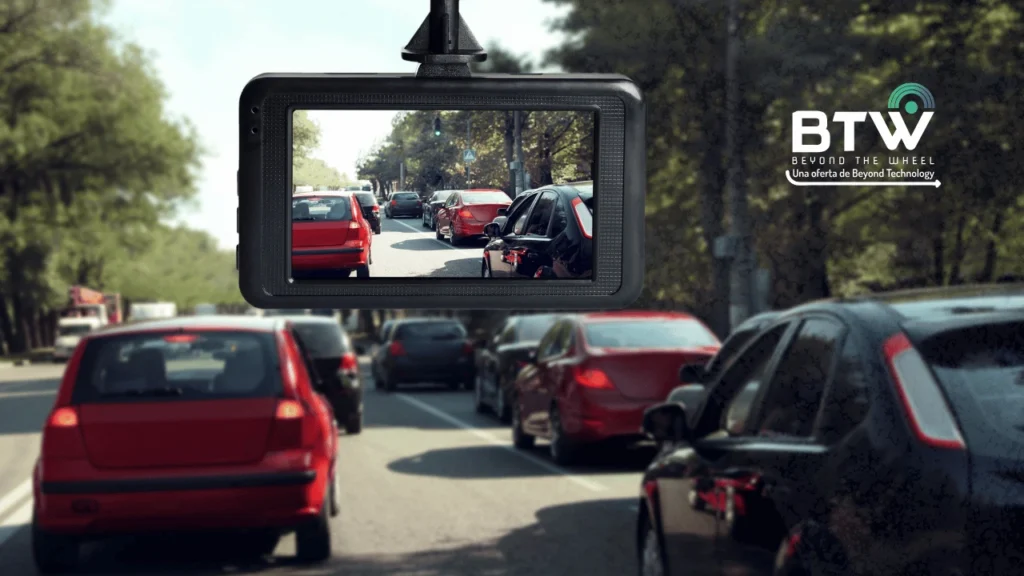
A dashcam for fleets can be installed directly in a vehicle and continuously record its journey. The device can store footage locally and, when integrated with a video and vehicle tracking platform, allow fleet managers to access information associated with each vehicle’s trips.
The Beyond The Wheel solution includes a dashcam, a data SIM card, SD card storage, and a platform for video tracking and viewing. The camera can be installed on a suction-cup mount, making it possible to move the device between different vehicles during a testing or implementation phase.
This integration means that video does not remain an isolated file. By combining footage with location data and other operational records, companies can analyze what happened during a journey with greater context. The platform also makes it possible to view vehicle locations in real time and review historical routes.
What is a vehicle camera used for in transportation operations?
One of the most important applications of a vehicle camera is providing evidence when an incident occurs. When there is an accident, an unexpected maneuver, or another potentially dangerous situation, having a recording can help reconstruct what happened and provide information for an internal investigation.
Video can also be useful when analyzing driving-related situations. Instead of relying only on a vehicle’s speed or location, fleet managers can use visual information to better understand how a particular event unfolded.
The solution includes video storage for emergency situations and a panic button that can send an alert to the platform along with a video snapshot of the reported event. These alerts can also be configured to reach designated email addresses.
How can a fleet dashcam improve driver safety?
A vehicle camera can become a preventive safety tool when it incorporates driver assistance systems. In the case of the Beyond The Wheel solution, sensors can generate alerts related to fatigue, distraction, cellphone use, and smoking inside the cabin.
Fatigue detection is particularly relevant for operations in which drivers spend several hours on the road. The system can identify signs such as yawning and eye closure associated with drowsiness and issue an audible alert to warn the driver before fatigue can potentially lead to an accident.
The goal, therefore, is not simply to record what has already happened. Monitoring can also be used to generate alerts during a journey and help fleet managers respond to specific risk situations.
What fleet information can be collected beyond video?
The value of an enterprise dashcam increases when video is integrated with other sources of vehicle data. GPS, for example, makes it possible to track vehicle locations in real time, review route history, monitor mileage, and receive driving-related alerts such as speeding notifications.
Video telematics can also work alongside other operational monitoring tools. The platform can integrate telematics information to identify fault codes generated by a vehicle’s onboard computer and support preventive or corrective maintenance planning. Different sensors can also be used to monitor cargo-related parameters during transportation.
This makes it possible to move beyond simply watching a camera and develop a broader view of each journey. Video, location data, alerts, and vehicle information can provide different pieces of the operational picture and help companies understand what is happening on the road.
Enterprise dashcam: from recording journeys to preventing incidents
For a business, installing a dashcam should go beyond simply recording vehicle journeys. Its value lies in the information it generates and in the ability to use that information to support decisions related to safety, operations, and incident management.
When a fleet faces risks such as accidents, theft, or mechanical failures, monitoring and video telematics tools can provide greater visibility into what happens on the road. Beyond The Wheel’s solution combines monitoring, live video, and alerts to support greater visibility and improve the ability to respond to emergency situations.
A dashcam can therefore become part of a broader fleet safety strategy. Video provides context, alerts can support a response to specific situations, and GPS tracking provides information about each vehicle’s journey.
What should you consider before implementing this technology?
Choosing a solution depends on the characteristics of the fleet and the level of visibility the company needs. There is a significant difference between using a camera solely to store recordings and implementing a connected system that combines GPS tracking, alerts, driver assistance, and a centralized platform.
It is also important to consider how the equipment will be installed, storage capacity, data connectivity, and how fleet managers will access and use the information. A properly implemented solution can make video part of existing operational processes rather than turning it into another source of data that goes unused.
Discover Beyond The Wheel solutions for your fleet
A dashcam can provide much more than a recording of the road. When integrated with video telematics, GPS tracking, and driver assistance tools, it can help companies better understand what happens during their journeys, investigate incidents, and generate alerts when potentially risky situations occur.
If you are evaluating a video monitoring solution for your vehicles, explore Beyond The Wheel and discover how its solutions can be integrated into your operation by speaking with an advisor.
